Image
| Registration Type | Member Price |
|---|---|
| Early Bird Registration (Sept. 11-Oct.3) | $750 |
| General Registration (Oct. 4-Oct.17) | $850 |
| Registration Type | Member Price | Non-Member Price |
|---|---|---|
| Early Bird Registration (Sept. 11-Oct. 3) | $750 | $850 |
| General Registration (Oct. 4-Oct.17) | $850 | $950 |
Not a member? We'd love to have you join us for this event and become part of the Chorus America community! Visit our membership page to learn more, and feel free to contact us with any questions at [email protected].
| Registration Type | Non-Member Price |
|---|---|
| Early Bird Registration (Sept. 11-Oct. 3) | $850 |
| General Registration (Oct. 4-Oct.17) | $950 |
Think you should be logged in to a member account? Make sure the email address you used to login is the same as what appears on your membership information. Have questions? Email us at [email protected].
| Registration Type | Price |
|---|---|
| Individual Session | $30 each |
| All Four (4) Sessions | $110 |
*Replays with captioning will remain available for registrants to watch until November 1, 11:59pm EDT.
Member Professional Development Days are specially designed for Chorus America members. If you're not currently a member, we'd love to welcome you to this event, and into the Chorus America community! Visit our membership page to learn more about becoming a member of Chorus America, and please don't hesitate to reach out to us with any questions at [email protected].
| Registration Type | Price |
|---|---|
| Individual Session | $30 each |
| All Four (4) Sessions | $110 |
*Replays with captioning will remain available for registrants to watch until November 1, 11:59pm EDT.
| Registration Type | Price |
|---|---|
| Individual Session | $30 each |
| All Four (4) Sessions | $110 |
*Replays with captioning will remain available for registrants to watch until November 1, 11:59pm EDT.
Member Professional Development Days are specially designed for Chorus America members. If you're not currently a member, we'd love to welcome you to this event, and into the Chorus America community! Visit our membership page to learn more about becoming a member of Chorus America, and please don't hesitate to reach out to us with any questions at [email protected].

The executive director of a chorus wears countless hats and juggles countless tasks and priorities. After over 18 years of learning on the job, Ruth Ann Ritchie has developed some practical strategies that can help you not just survive, but actually thrive, in this beautifully chaotic role.
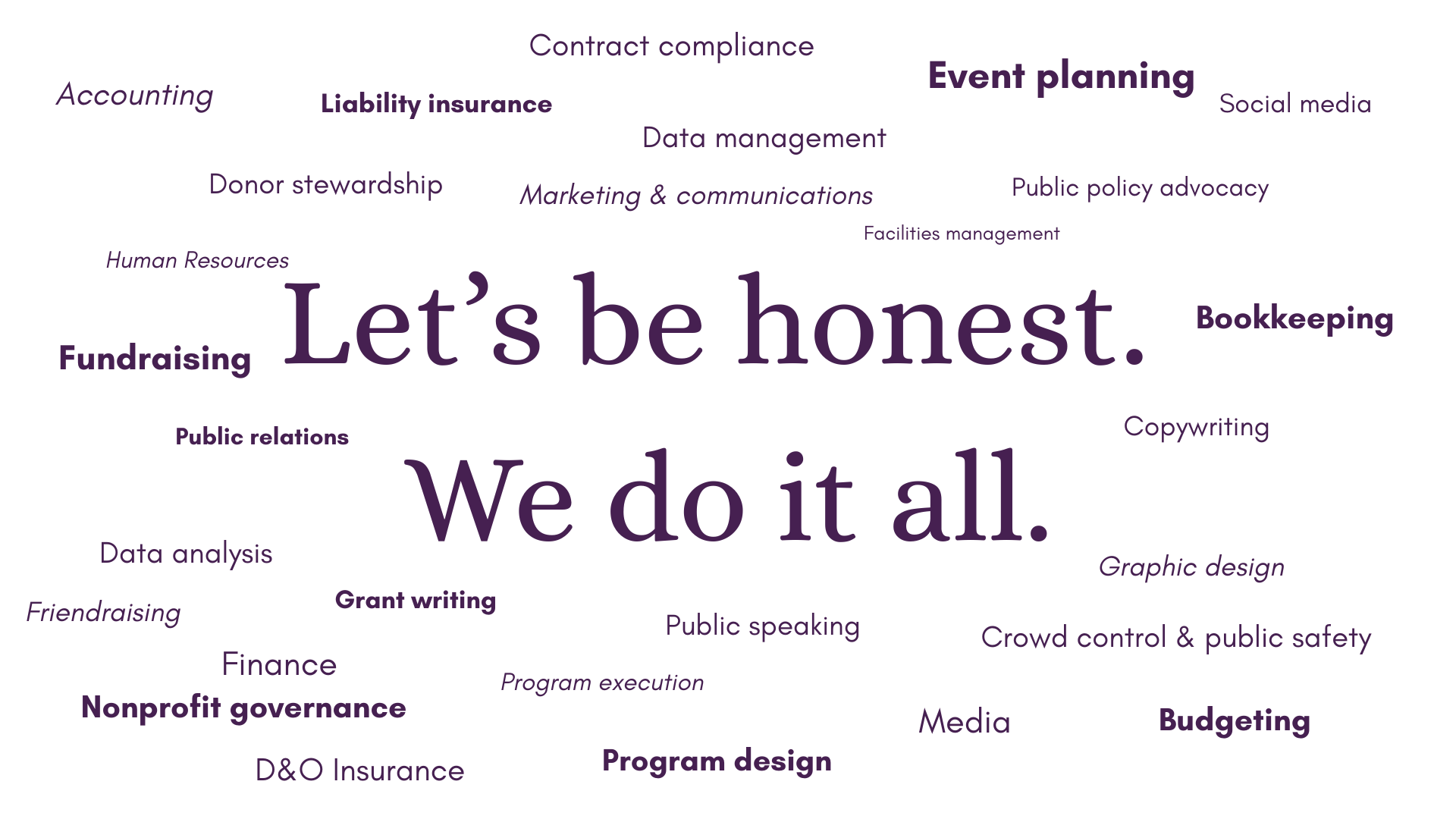
The Executive Director role is hard. Many of us (myself included) come from a background in the performing arts. Nowhere in my musical education did I receive training in things like contract compliance, data analysis, donor stewardship, bookkeeping, or insurance. And no one told us that the work of an Executive Director is part arts management and part arts entrepreneur…but also part miracle worker and part street fighter.
I’ve been an ED for over 18 years and have always worked in small organizations. I love the job, but I do know how hard it is, and how no one understands this job except other EDs. All of my advice below is wisdom I’ve learned from years of making mistakes, dusting myself off, and trying again.
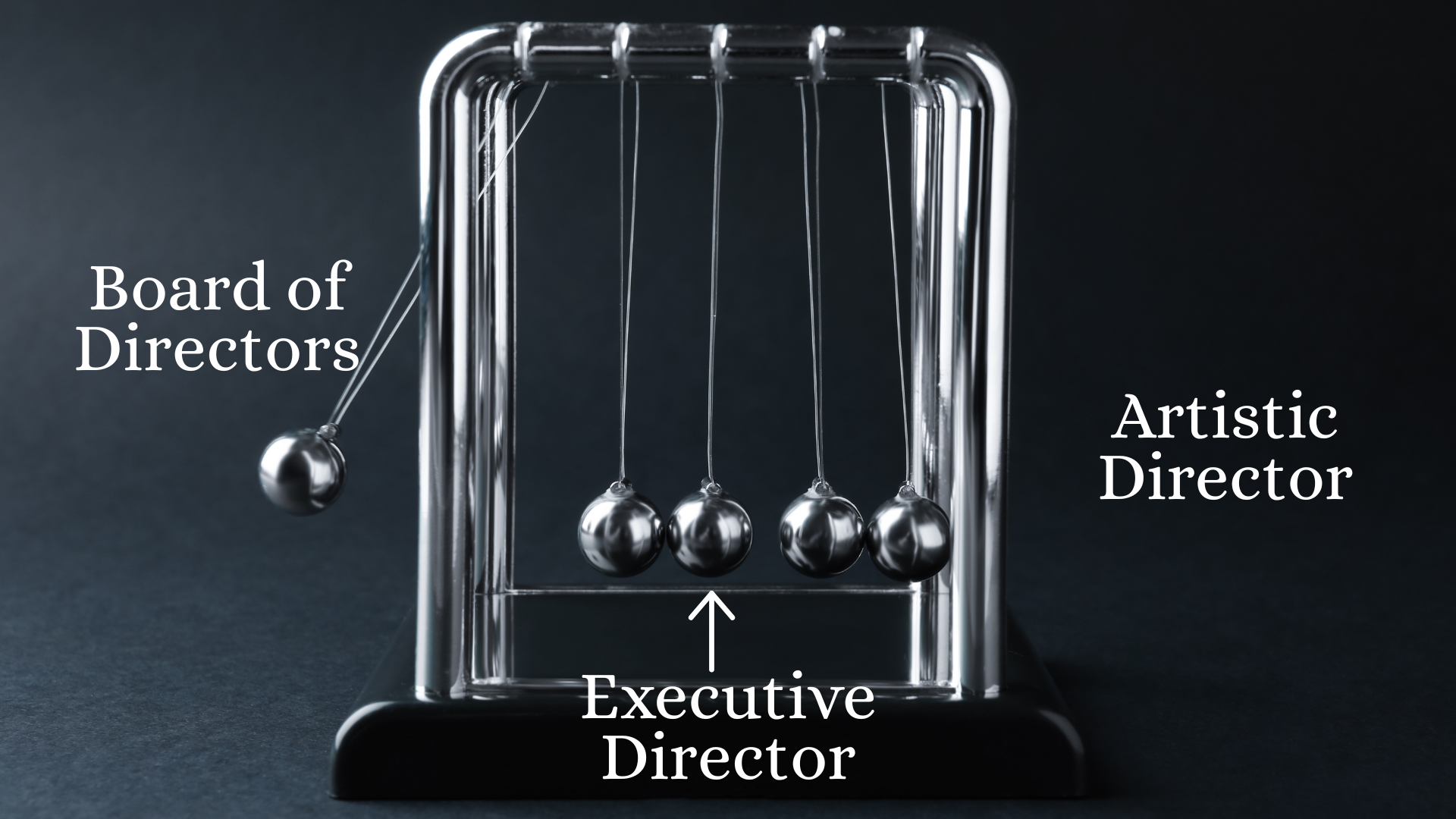
Being an ED is like being the middle ball in a Newton’s cradle. On one side, you have the Board of Directors who are concerned with risk management and financial controls. On the other side is the Artistic Director. He or she can come up with the most fascinating ideas and biggest plans, but those dreams usually don’t come with a budget or strategy. As Executive Directors, it’s our job to take that vision and translate it into something that our Board of Directors can understand. We may have to absorb the hits coming from both sides, but we also are the ones who transfer the energy from one side to the other.
If you are struggling with millions of things flying at you from all directions (from the Board and Artistic staff, not to mention granting organizations, patrons, state and federal reporting agencies, let alone the day-to-day demands of running a business) I suggest you begin by listing all the departments in your organization. Even if you’re a team of one, your choir still has departments: legal compliance, HR duties, concert production, marketing, development, educational programming, and more. (I strongly recommend project management software such as Asana, Trello, or Monday to keep yourself organized.) Every choir will look a little different, but here’s my list:
Also make sure that you have a calendar (print or digital) for the entire season where you can track:
Now that you know how your company is structured and how your season is laid out, it’s time to get to work. Start by focusing only on what you plan to do in the next five days. Do a brain dump to get every thought and “To Do” out of your head. Think through the tasks in each department, round up every sticky note on your desk, check your email and voice memos to make sure you’ve caught everything, and gather them together in one place.
You may be familiar with something known as the Eisenhower Matrix. Created by US General and President Dwight Eisenhower, this is a method of prioritizing tasks based on determining their urgency and importance. If they were important and urgent, he would do them right away; if they were urgent but not important, he’d hand them off to someone else; if they were important but not urgent, he’d schedule a time where he could handle that task; and if they were neither important nor urgent, he’d cross them off his list altogether.
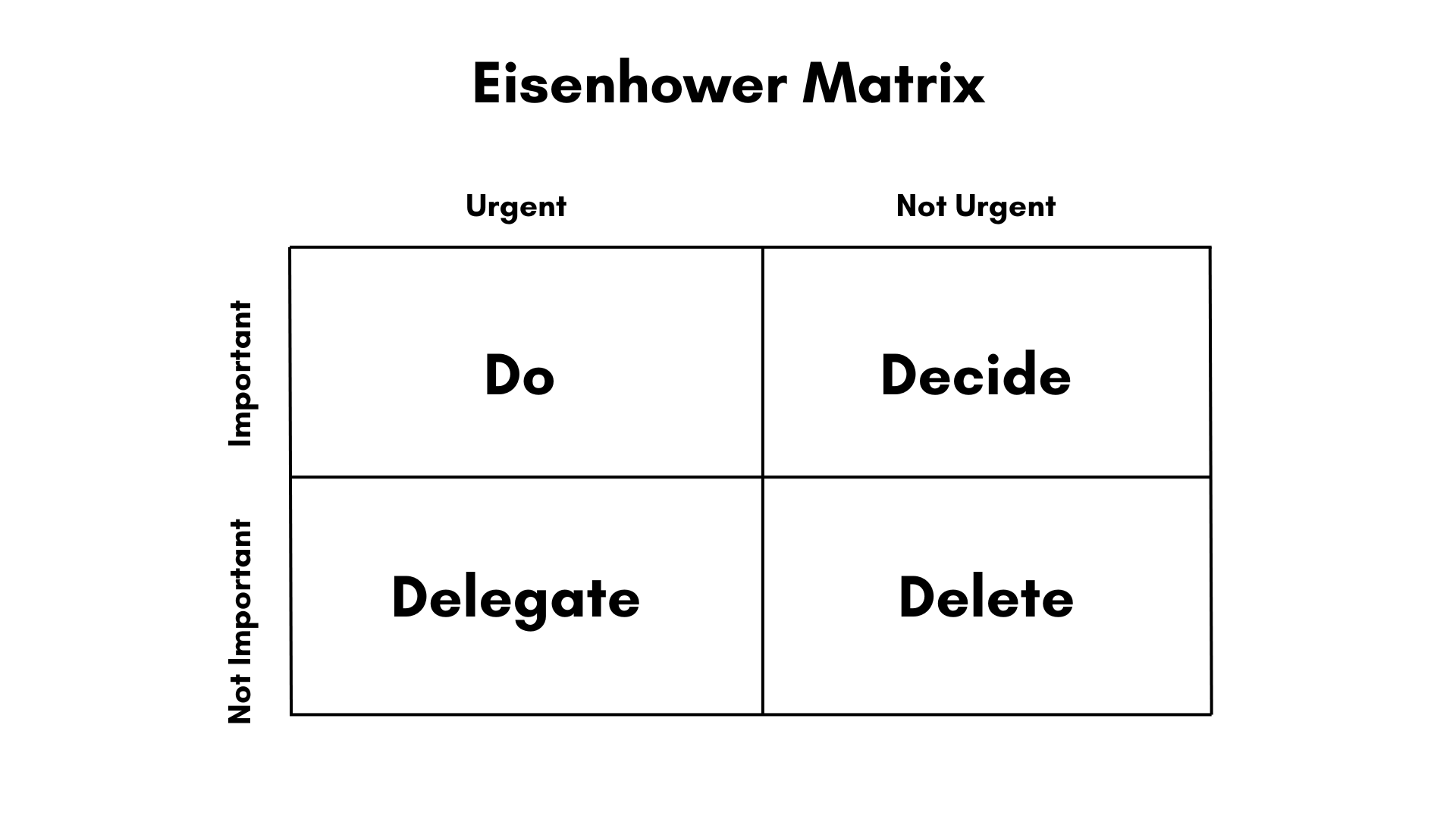
Now, as the ED of a small shop, we don’t have the force of the US Army or government behind us. Everything is ours to get done. Everything is urgent AND important. Even so, we have to recognize that we are, in fact, human, and we have to learn our limits. To that end, I’ve created a modified Eisenhower Matrix, just for us
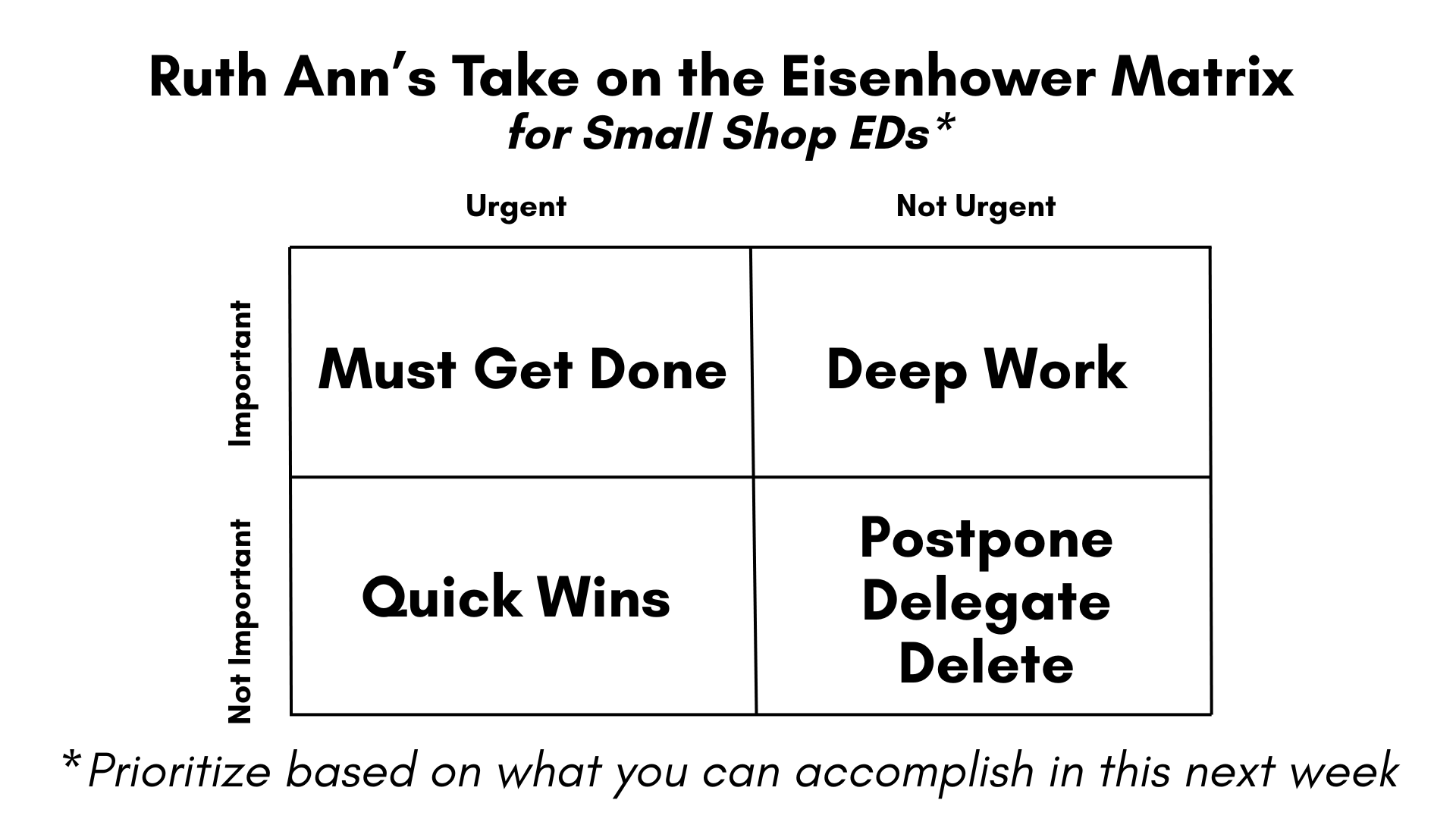
What must get done this week? These are meetings you can’t move, payroll that you have to run, grant applications that are due, concert programs that have to be sent to the printer – anything that absolutely must be handled this week, or the organization will suffer.
What are my quick wins? These are small items piling up that are not hugely important, but will start to get on your nerves if you don’t handle them – email responses, handling a ticketing problem, paying bills.
What is your deep work for the week? For me, this is working on grant applications that are due in a couple of weeks, writing marketing plans, drafting end-of-year appeal letters – anything that requires a focused block of time to do my best work.
And finally, look at everything else that’s left on your list.
What can I postpone until next week?
What can I delegate to someone else?
What can I delete entirely?
Once you place everything into those first three categories (Must Get Done, Quick Wins, and Deep Work), spend some quality time with your calendar and assign a timeslot to each task. A couple of points to remember:
As your choir grows, you will reach a point when it simply is not possible to do it all yourself. When I’ve hit those moments, I’ve asked myself:
And then I try to find someone who loves to do that particular thing. When I was a solo ED and desperately needing to hire our first administrative staff member, one of my biggest challenges was managing the box office. Our patrons were used to calling my predecessor and having a nice conversation about Orpheus and life and many other things while they made a ticket purchase. But when Orpheus started growing by leaps and bounds, I simply didn’t have time to chat with every person who called. Sienna, our Operations Assistant, prefers to talk on the phone as her main form of communication, so it was easy to hand off the box office to her. Our patrons still receive one-on-one attention, but it’s no longer taking time from my packed schedule unless there’s a true problem.
As we kept growing, I was having a hard time keeping up with the sheer amount of data that we need to track. I simply couldn’t find the time every day to make sure that our ticketing system was talking properly to Quickbooks. I would rush to get the work done, which meant I’d make mistakes, which meant I’d have to spend more time backtracking to find the problem, plus I always felt behind with the data I needed at any given moment. Enter Meg, our Business Manager and queen of spreadsheets. Her main job is to keep track of all our data – donations, ticket sales, marketing reports, and more. Again, this frees me up to handle the big picture items, like donor meetings and marketing plans, because someone else is focused on keeping our data accurate and timely.
You don’t always need to put someone on payroll, and, of course, you may not be able to afford to right now. In my case, Sienna and Meg are dealing with proprietary and personal information, so we brought them on as permanent staff. But I also hire singers within the choir to take on other tasks for us, such as setting up risers, moving pianos, leading our educational programs, writing program notes, and handling our social media. They love Orpheus and want to help it grow and enjoy taking on additional projects to support the organization. For now they are contracted for these additional projects with additional pay, but we have plans to expand those roles as the company gets bigger. Be sure to consider what your Board and other volunteers have to offer as well. Do you know an amateur photographer who could take concert photos, someone who could donate graphic design work, or even someone who would love to organize your music library?
Despite the many challenges and (sometimes unrealistic) expectations of the job, I love this work. Working with a small staff means that I stay closer to the artform than I would if I was working at a large symphony or opera company. And no one can deny that this is a wildly creative job, one that involves constant strategizing and problem-solving and finding new ways to advance the organization and our work. Being an Executive Director isn’t for the faint of heart, but a job that truly makes a direct impact on our artists and community.
Ruth Ann Ritchie is Executive Director of the Orpheus Chamber Singers, a professional choir based in Dallas, TX, and owner of Radial Arts Consulting, which provides administrative coaching to start-up and small nonprofits. Contact her at [email protected].
