Image

| Registration Type | Member Price |
|---|---|
| Early Bird Registration (Sept. 11-Oct.3) | $750 |
| General Registration (Oct. 4-Oct.17) | $850 |
| Registration Type | Member Price | Non-Member Price |
|---|---|---|
| Early Bird Registration (Sept. 11-Oct. 3) | $750 | $850 |
| General Registration (Oct. 4-Oct.17) | $850 | $950 |
Not a member? We'd love to have you join us for this event and become part of the Chorus America community! Visit our membership page to learn more, and feel free to contact us with any questions at [email protected].
| Registration Type | Non-Member Price |
|---|---|
| Early Bird Registration (Sept. 11-Oct. 3) | $850 |
| General Registration (Oct. 4-Oct.17) | $950 |
Think you should be logged in to a member account? Make sure the email address you used to login is the same as what appears on your membership information. Have questions? Email us at [email protected].
| Registration Type | Price |
|---|---|
| Individual Session | $30 each |
| All Four (4) Sessions | $110 |
*Replays with captioning will remain available for registrants to watch until November 1, 11:59pm EDT.
Member Professional Development Days are specially designed for Chorus America members. If you're not currently a member, we'd love to welcome you to this event, and into the Chorus America community! Visit our membership page to learn more about becoming a member of Chorus America, and please don't hesitate to reach out to us with any questions at [email protected].
| Registration Type | Price |
|---|---|
| Individual Session | $30 each |
| All Four (4) Sessions | $110 |
*Replays with captioning will remain available for registrants to watch until November 1, 11:59pm EDT.
| Registration Type | Price |
|---|---|
| Individual Session | $30 each |
| All Four (4) Sessions | $110 |
*Replays with captioning will remain available for registrants to watch until November 1, 11:59pm EDT.
Member Professional Development Days are specially designed for Chorus America members. If you're not currently a member, we'd love to welcome you to this event, and into the Chorus America community! Visit our membership page to learn more about becoming a member of Chorus America, and please don't hesitate to reach out to us with any questions at [email protected].

From flexible sick-day policies to hybrid rehearsals and a renewed focus on singer well-being, choruses are redefining what it means to care for their communities in a post-pandemic world.
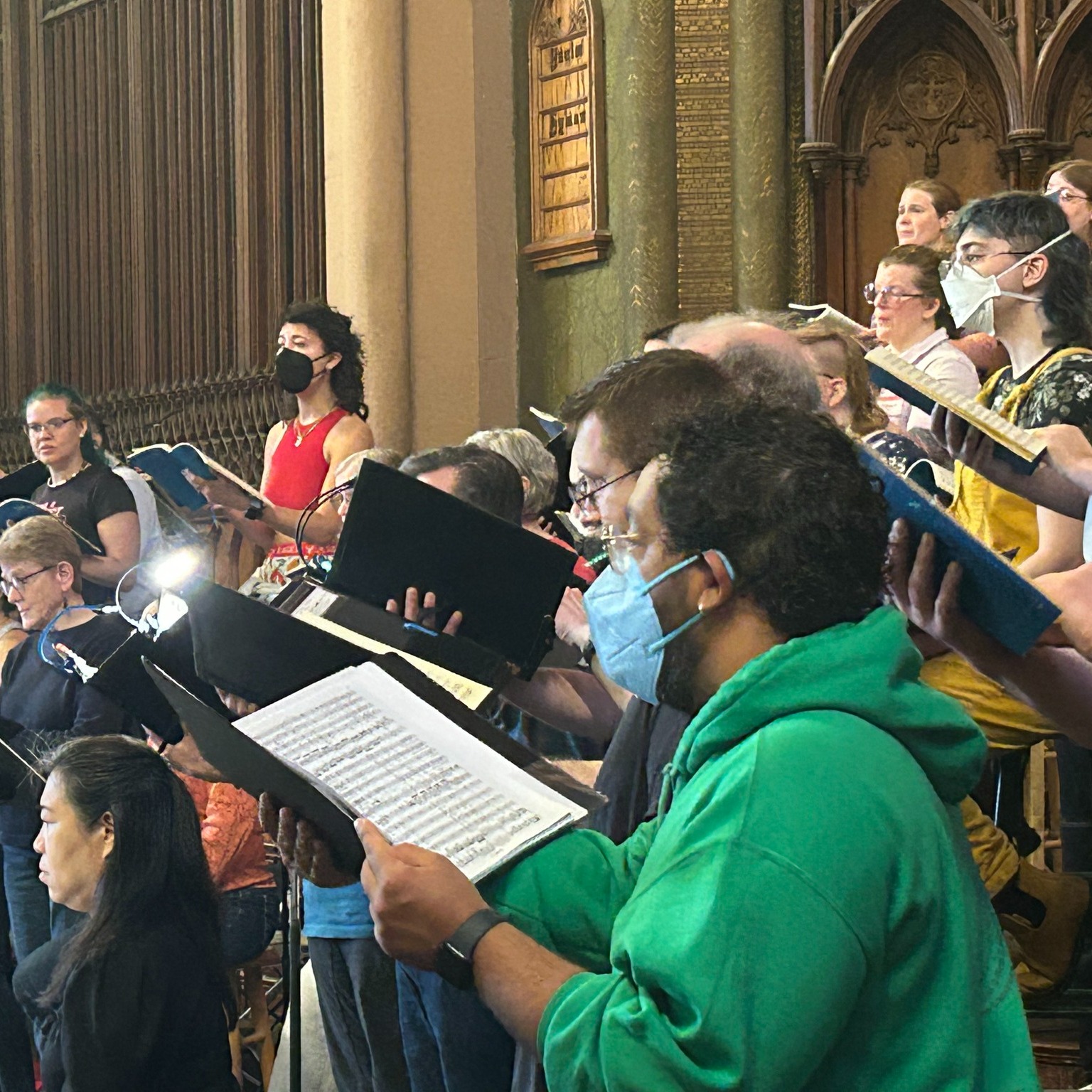
The COVID-19 pandemic changed the landscape of the choral world and our views of health and wellness in ways we are just beginning to understand. While it was a traumatic time for choruses, with canceled concerts and the sudden cessation of in-person communal singing, the pandemic also taught us lessons about resilience, community, and caring.
This article began with an online Chorus America survey, in which respondents shared insights into the health and wellness practices of their organizations. A selection of follow-up interviews provided additional context. While some COVID-era practices, like requiring proof of vaccination, have been discontinued by most organizations, others remain common, including optional masking, encouraging singers to stay home when sick, and hybrid rehearsals. Here’s how these approaches are showing up across ensembles today.
The pandemic ushered in a plethora of new practices as choruses found ways to stay connected and to come back together in person as safely as possible. Masking was prevalent as singers returned to in-person rehearsals and performances. No survey respondents reported that masking is still mandatory, but many said that their choruses support masking at the discretion of individual singers.
“At any given rehearsal, we might have 15 people who are wearing a mask,” says Ruthie Miller, executive director of Coro Allegro, an LGBTQ+ and allied classical chorus in Boston, Massachusetts. “It’s not always the same people. There are people who mask every single rehearsal. Other people, if they feel a little immunocompromised or if they are going to see an elderly relative, they might mask for that reason.”
She adds that they try to sing without masks when possible. “Most [members] feel confident taking the mask off for the concert, which really helps the sound a lot. But there are still people who are not comfortable.”
“I think that there is naturally a higher awareness of illness now, but I do think that singers in particular have always been more cautious around illness,” says Kira McGirr, executive director and singer with the Cleveland Chamber Choir, a professional ensemble in Cleveland, Ohio. “Everyone is a little better now at analyzing their own symptoms. We’re also more aware of what is out there. I’m much more cautious with my own health.”
She says that masking is optional. “We trust singers to monitor their own health and act accordingly.”
A virtual option for rehearsals, while discontinued by some survey respondents, was reported to be a part of regular operations for others.
McGirr says that one of the benefits of surviving the pandemic is that we are all more familiar with Zoom. “If you are ill with something that appears to be contagious, a Zoom rehearsal is always an option. Our artistic director is great about always having the capacity to be able to [use] Zoom in a rehearsal.”
Coro Allegro also provides an online rehearsal option. “People definitely take us up on it,” says Miller. “There’s been some feeling that maybe some people don’t come to rehearsal because they know they can do Zoom, so that’s something we have talked about as a board, because it is really very different having everyone in the room than having some people on Zoom. It helps that person learn their music, but it doesn’t help the ensemble to work together and grow. That’s a real balancing act, but at this point in time, [Zoom] is still available.”
Miller says that Coro Allegro’s formal attendance policy only allows one Zoom attendance to count (i.e., if you attend four rehearsals via Zoom, you have officially missed three), but she also says that there is flexibility if someone is sick. Ensembles are still navigating the gray areas around hybrid rehearsals, and adaptability was a common theme for survey respondents.
In addition to providing a way for singers who are home with a communicable illness to observe rehearsals and sing along, some choruses have found that a hybrid option is helpful in other ways, such as using Zoom for rehearsals that have been canceled due to inclement weather, or as a way to include singers who are traveling.
“Because we are a professional ensemble, there are times when people do have to miss a rehearsal because of other gigs,” says McGirr. “But perhaps they are free for that time and so they can Zoom in for the rehearsal. I’ve done that on the road myself.”
Providing proof of vaccination has been dropped by most respondents, although one organization reported that they continue to require that all singers, staff, and volunteers have the latest available COVID vaccine booster.
Sarah Shoffner, executive director of the Boston Gay Men’s Chorus, says, “Any COVID-era vaccination requirements or verification processes were discontinued in alignment with broader public health normalization and to reduce administrative burden, while still emphasizing personal responsibility and informed consent.”
Most survey respondents have stopped mandatory testing. Shoffner says, “Regular or event-based testing requirements were phased out as testing availability, public guidance, and risk tolerance shifted. The organization now relies on symptom-based decision-making and isolation following a positive test rather than proactive testing.”
However, not all choruses have stopped testing altogether. Encouraging members to test if they are feeling sick, asking singers to stay home if they are symptomatic, and requiring testing under specific circumstances were all solutions reported by respondents.
Coro Allegro continues to test before each concert, but singers help to guide organizational policies. “We do an annual survey,” says Miller. “We found that the majority of singers still favor what we’re doing. If those surveys started showing that only 20 percent of the chorus favored what we were doing, we would have to discuss whether it was time to make a change.”
However, she is concerned about the financial burden that testing places on members. “I do hope at some point we will be able to drop the extra expense of testing before a concert,” she says. “We do have a number of people who are on scholarships for their dues, and suddenly this is $30 per concert, three concerts a year. So if you’re getting a scholarship for your $200 dues but you still have to come up with $90 for your COVID tests, that could be a real hardship.”
“After our concert last year,” she shares, “the artistic director was disappointed that some people wore masks, even though we did all the testing. We realized that no one explicitly said why we were doing the testing: We’re doing this so hopefully you will feel comfortable unmasking, because it makes a big difference in the sound. So this year, he said, ‘If you really feel you need to mask, you may still mask; we’re not banning masking, but we hope this will allow you to unmask because it really helps a lot. Diction is better, overall sound is better, the blend is better. Singers were not meant to sing into masks.’”
A common thread among respondents was singers having an increased awareness of the potential impacts of their health. The specific definition of “too sick to come to rehearsal” varied among ensembles and individual singers, but fever was a commonly reported reason for singers being asked to stay home.
“We take sickness much more seriously, understanding how contagious illnesses can be,” says Martha Kunau, executive director of Magnum Chorum, a 55-voice a cappella choral ensemble in Minneapolis, Minnesota. “Having a fever is our ‘too sick to come to rehearsal’ line. We also ask singers to stay home if they are coughing or sneezing excessively. If singers do come to rehearsal and are showing some symptoms, we ask that they sit to the side and mask. [We have] flexible attendance for sick singers.”
Many survey respondents indicated that they leave it to the discretion of individual singers, encouraging them to evaluate their own symptoms and stay home if they believe they may be contagious. These choruses have found that their members are thoughtful about keeping each other safe.
“The determination to stay home from rehearsal is a personal one. We find our members conscientious about taking steps not to infect others,” says Jeffrey Bernstein, founding artistic and executive director of the Pasadena Chorale, an auditioned community chorus in Southern California. Bernstein finds that people have a new understanding of the role they play in their own health, as well as their impact on others.
“We understand more that health is a thing that people deal with,” he says. “That doesn’t count against you. You’re having a medical issue? Go get well, and come back when you’re ready. You’re a human being and we need to make sure that you have what you need.”
He adds that this is a new way of thinking, potentially driven by the pandemic. “In my music education, all the emphasis was on virtuosity. That’s important and it’s great for music-making, but it’s being done by human beings, and I don’t think we were taught that. This is a gesture in that direction, understanding that a chorus is a group of people and we want you to have what you need. That’s not just for physical health issues either.”

Survey respondents shared a variety of lessons learned from the pandemic about health, caring, and community.
While there is no single right way for a chorus to support its members’ health and wellness, flexibility and caring for the people in our ensembles are the themes that came up again and again. Organizations may do things in different ways, but one thing is clear: In the choral community, we care for one another.
Caitlin Patton is the Executive Director of the National Music Festival, a freelance writer, and a consultant. She lives on a small farm in Maryland and is a choral singer, violinist, and former board chair of the Chester River Chorale.
